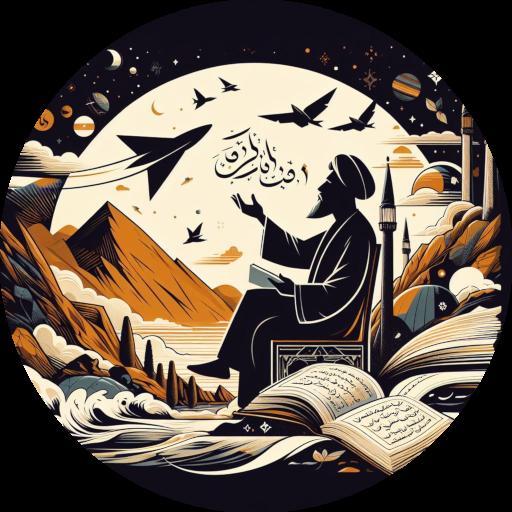
Persian poetry is one of the oldest and richest literary traditions in the world. Names like Ferdowsi, Rumi, Hafez, Saadi, Khayyam, and Nima Yushij are not merely poets; they are cultural pillars whose verses shaped philosophy, spirituality, language, and identity across centuries. Yet many readers today ask an uncomfortable question: why haven’t we seen a truly great Persian poet in recent decades?
The answer is not simple, and it is certainly not because talent has disappeared.
1. The Weight of a Monumental Tradition
One major reason is the overwhelming legacy of the past. Persian poetry reached extraordinary heights over a long historical arc. When a tradition produces multiple world-class geniuses, later poets are inevitably measured against near-mythical standards. This creates a perception problem: contemporary poets may be original and skilled, but they are constantly compared to giants whose works have had centuries to mature, circulate, and influence culture.
Greatness often requires time. Hafez was not “Hafez” overnight.
2. Changing Social and Cultural Conditions
Classical Persian poetry thrived in societies where poetry was central to public life. Verses were memorized, recited in gatherings, embedded in daily speech, and valued as a primary form of wisdom. Today, poetry competes with social media, film, music, and instant digital content. Language itself has shifted toward speed and utility, while poetry demands slowness, reflection, and depth.
When a culture listens less, poets speak into a quieter room.
3. Political and Institutional Pressures
In many Persian-speaking regions, modern poets face censorship, limited publishing opportunities, and economic insecurity. Historically, poets often had patrons, courts, or institutions that allowed them to focus on their craft. Today, many writers must balance creative work with survival, reducing the time and mental space needed for deep artistic development.
Great art rarely flourishes under constant pressure.
4. Fragmentation of the Audience
In the past, a great poet could speak to a relatively unified cultural audience. Today’s society is fragmented—ideologically, linguistically, and geographically. Persian poetry itself has split into multiple modern styles, diasporic voices, and experimental forms. This diversity is a strength, but it also makes it harder for one poet to become a universally recognized figure.
Greatness now exists in niches rather than at the center.
5. We May Be Too Close to See It
Another possibility is the simplest one: we may already have great poets, but history hasn’t caught up yet. Literary greatness often requires distance. Rumi’s global recognition, for example, expanded dramatically centuries after his death. Contemporary poets are still “too recent” to be canonized, translated widely, or fully understood.
Time is the final editor.
6. A Different Kind of Greatness
Finally, we should question what we mean by “great.” Classical Persian poets often wrote within shared metaphysical, mystical, or epic frameworks. Modern poets are more personal, fragmented, political, or experimental. Their greatness may not lie in universal maxims, but in honesty, resistance, and innovation.
Perhaps we are not lacking great poets—perhaps we are witnessing a transformation of greatness itself.
Conclusion
The absence of a widely acknowledged “great” Persian poet in recent times does not signal decline. It reflects changing cultural structures, historical distance, and evolving definitions of art. Persian poetry is still alive—quietly growing, reshaping itself, and waiting for a future generation to look back and recognize what we were too close to name.
History has a long memory. Poetry always finds its moment.